
A restaurant can have excellent food and still struggle to build customer loyalty.
Why?
Because today’s hospitality market is about more than the product on the plate. Customers experience a restaurant through its name, visual identity, atmosphere, menu, service, packaging, social presence, and overall personality.
That complete experience is the brand.
A strong restaurant brand gives customers a reason to remember the business, choose it over competitors, and return again.
A Restaurant Brand Is More Than a Logo
One of the most common misconceptions about restaurant branding is that branding begins and ends with a logo.
A logo is only one element of a much larger system.
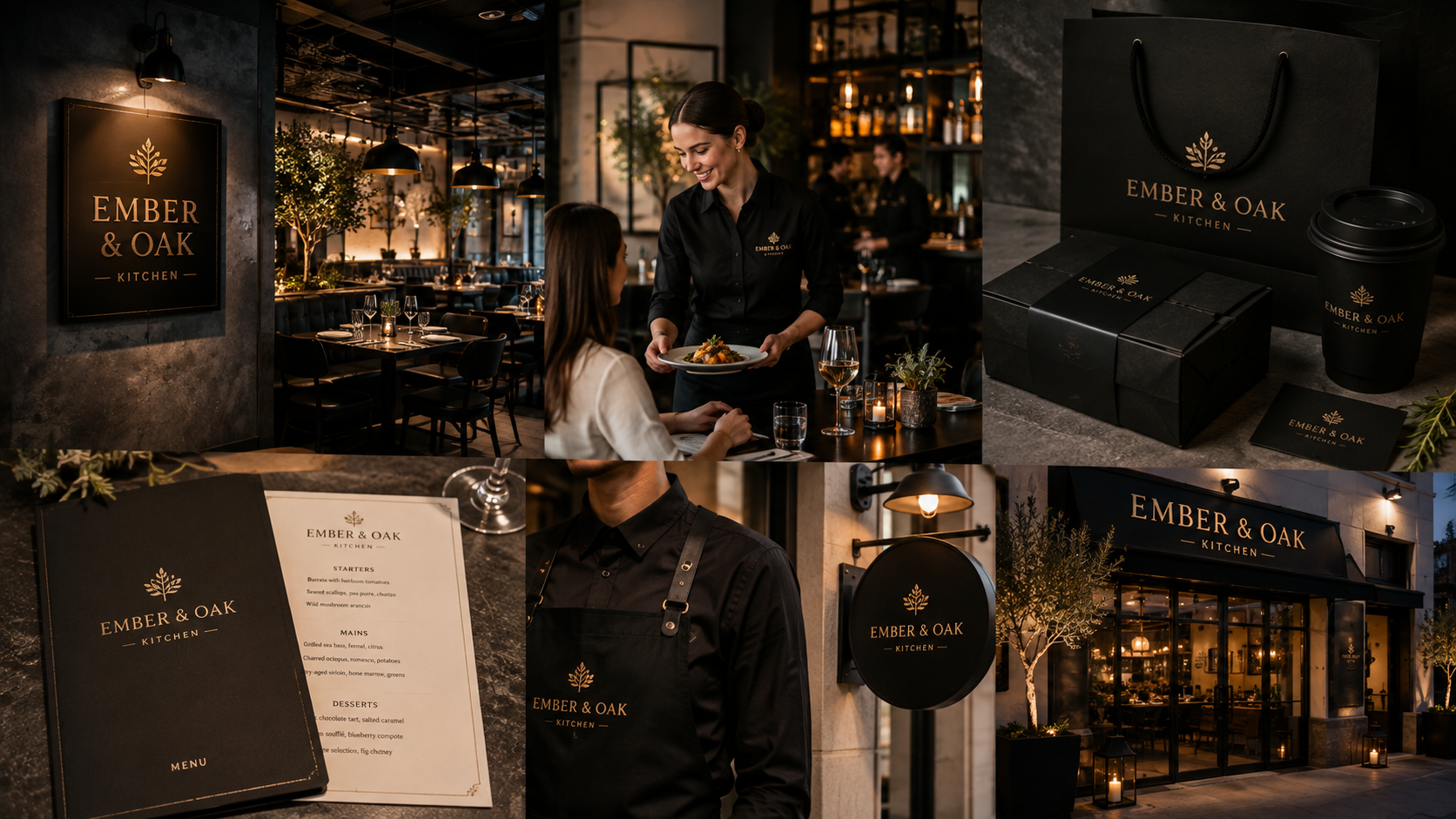
A restaurant’s brand includes its positioning, colors, typography, photography, tone of voice, menu design, customer experience, interior environment, packaging, digital presence, and marketing.
These elements should work together.
When they do, customers immediately understand what the restaurant represents.
Define Your Position in the Market
Before designing a logo or choosing brand colors, restaurant owners should answer an important question:
Why should customers choose this restaurant instead of another one?
Positioning helps answer that question.
A restaurant may compete through premium dining, convenience, affordability, authenticity, innovation, atmosphere, family experience, or a specific culinary identity.
Trying to appeal to everyone often makes a brand less memorable.
A focused positioning strategy allows the restaurant to create a stronger connection with its ideal customer.
Understand the Target Customer
A strong restaurant brand is built around the people it wants to attract.
Understanding the target customer means considering factors such as lifestyle, dining habits, expectations, spending behavior, location, and preferences.
For example, a premium urban restaurant may need a completely different brand experience from a family-focused casual dining concept.
The branding, menu, service, photography, and communication should reflect the expectations of the intended audience.
Create a Consistent Visual Identity
Once positioning is established, visual identity becomes an important part of brand recognition.
Colors, typography, photography, packaging, menus, signage, uniforms, and digital graphics should feel like they belong to the same brand.
Consistency creates familiarity.
When customers see the same visual language across Instagram, the restaurant website, menu, takeaway packaging, and physical location, the brand becomes easier to recognize.
This is particularly important for growing restaurant groups.
Make the Customer Experience Part of the Brand
Brand strategy should extend beyond marketing.
Imagine a restaurant that presents itself online as sophisticated and premium but provides inconsistent service in the dining room.
The disconnect can damage trust.
The customer experience should reflect the promise made by the brand.
This includes:
- How customers are greeted
- How employees communicate
- How quickly orders are handled
- How problems are resolved
- How the dining environment feels
- How the food is presented
- How customers are followed up with
Every interaction contributes to brand perception.
Build a Strong Digital Presence
For many customers, the first interaction with a restaurant happens online.
A restaurant website, Google presence, social media profiles, photography, online menus, and reviews all contribute to the brand.
A strong digital presence should make it easy for customers to understand the concept and take action.
High-quality photography is particularly important because food is highly visual.
Poor images can make a great restaurant appear less appealing, while professional photography can communicate quality before the customer ever walks through the door.
Protect Brand Consistency During Growth
Brand consistency becomes increasingly important as restaurants expand.
Opening multiple locations introduces more employees, managers, vendors, marketing channels, and customer touchpoints.
Without clear brand standards, each location may gradually develop its own identity.
Brand guidelines can help maintain consistency.
These guidelines may define:
- Logo usage
- Brand colors
- Typography
- Photography style
- Messaging
- Social media tone
- Packaging
- Signage
- Customer experience standards
This allows a restaurant group to grow without losing the identity that made the original concept successful.
Brand Strategy Should Support Business Goals
Branding should not exist purely for aesthetics.
It should contribute to measurable business objectives.
A strong brand can support customer acquisition, increase perceived value, strengthen loyalty, improve marketing effectiveness, and create opportunities for expansion.
This is why brand development should be connected to the restaurant’s broader business strategy.
Black Apron’s approach to brand development combines brand identity with strategic planning designed for hospitality businesses and foodservice concepts.
Final Thoughts
A memorable restaurant brand is built through consistency.
The logo matters, but so do the menu, service, atmosphere, photography, packaging, website, social media, and every interaction a customer has with the business.
The strongest hospitality brands do not simply sell meals.
They create experiences customers recognize, remember, and want to experience again.
