
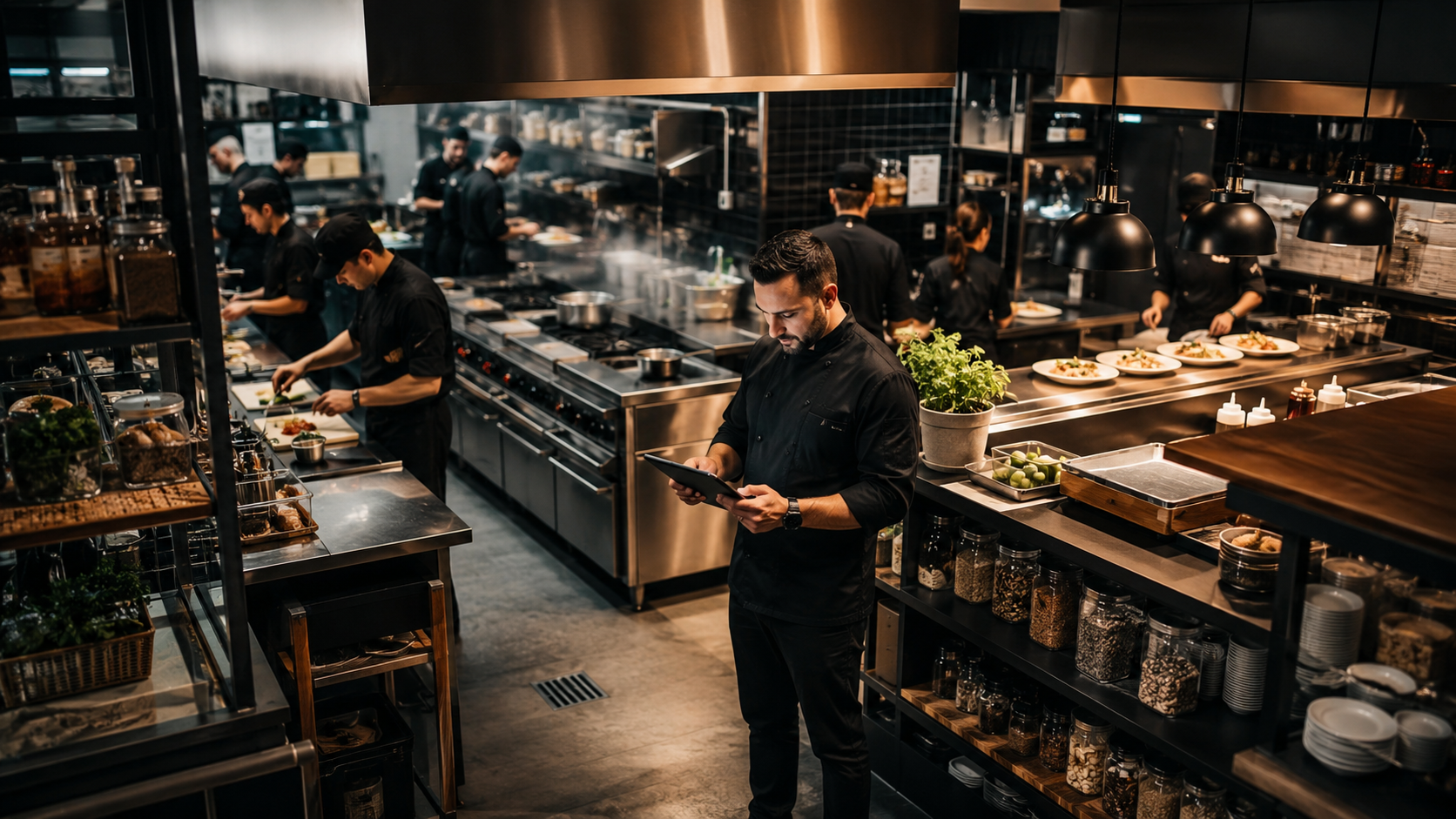
Running a successful restaurant requires much more than great food and excellent customer service. Behind every consistently high-performing hospitality business is a strong operating system that allows people, processes, finances, and guest experiences to work together.
Many restaurant owners reach a point where the business becomes difficult to manage. Sales may be increasing, but labor costs are rising. Employees may be working harder, yet service consistency starts declining. Inventory becomes harder to control, managers spend more time solving problems, and owners become increasingly involved in daily operations.
The problem is often not a lack of effort. It is a lack of structure.
A scalable restaurant operating system creates the framework a business needs to perform consistently today while preparing for future growth.
Start With Clearly Defined Processes
One of the most important components of restaurant operations is process consistency.
Every major activity should have a defined process, from opening and closing procedures to food preparation, inventory receiving, customer service, cleaning, cash handling, and staff scheduling.
When employees rely entirely on individual experience or personal preferences, performance can vary significantly from shift to shift.
Documented processes provide clarity.
They allow employees to understand exactly what is expected and give managers a consistent standard against which performance can be measured.
Build Strong Management Systems
Restaurant managers have a major influence on operational performance.
However, managers should not spend every day reacting to problems. They need systems that allow them to identify issues before they become expensive operational challenges.
Daily checklists, shift meetings, performance reviews, inventory reports, and labor tracking can create greater visibility across the business.
A strong management system should answer important questions:
Are labor costs under control?
Is inventory being used efficiently?
Are service standards being maintained?
Are employees properly scheduled?
Are customer complaints increasing?
Are sales meeting expectations?
The goal is to replace guesswork with measurable information.
Control Labor More Strategically
Labor is one of the largest controllable expenses for many restaurants.
Poor scheduling can create unnecessary costs while understaffing can damage customer experience.
A scalable labor system considers sales patterns, peak hours, seasonal demand, employee availability, and productivity.
Instead of scheduling based purely on habit, restaurant leaders should analyze historical performance and expected demand.
The objective is not simply to reduce labor.
It is to make sure the right number of employees are working at the right time.
Improve Inventory Management
Inventory problems can quietly reduce restaurant profitability.
Over-ordering creates waste and ties up cash. Under-ordering can lead to unavailable menu items and disappointed customers.
A structured inventory system should include consistent receiving procedures, storage standards, portion control, regular counts, and variance analysis.
Restaurant leaders should also understand the relationship between food costs and menu pricing.
When inventory information is accurate, owners can identify which products are generating healthy margins and which ones may need to be adjusted.
Create Consistent Training
A restaurant cannot scale successfully if every new employee has to learn through trial and error.
Training should be structured around the restaurant’s standards, culture, customer experience, and operational procedures.
Effective training can include:
Position-specific onboarding
Service standards
Food safety procedures
POS training
Customer recovery procedures
Opening and closing responsibilities
Product knowledge
Leadership development
Training should also continue after onboarding.
Ongoing development helps employees improve their performance and creates a stronger internal leadership pipeline.
Use Data to Make Better Decisions
Restaurant owners have access to more operational data than ever before.
The challenge is knowing which numbers actually matter.
Useful restaurant KPIs can include sales per labor hour, food cost percentage, labor percentage, average check size, table turnover, customer retention, waste, and location-level profitability.
Tracking these metrics regularly allows management to identify trends instead of waiting until problems become obvious.
For example, declining profitability may not necessarily mean sales are falling. It could be caused by rising labor costs, food waste, purchasing inefficiencies, or changes in menu mix.
Data helps identify the actual problem.
Design Operations for Growth
A system that works for one restaurant may not automatically work for three, five, or ten locations.
Scalability requires standardization.
Brands planning to expand should establish clear operating standards before opening additional locations.
These standards can cover staffing, training, procurement, customer experience, technology, reporting, branding, and management responsibilities.
The earlier these systems are established, the easier it becomes to replicate successful operations.
The Role of Strategic Hospitality Management
Building an operating system takes time, experience, and continuous refinement.
Restaurant owners often become overwhelmed because they are simultaneously managing people, finances, marketing, suppliers, customers, and growth strategy.
Strategic hospitality management can provide the structure needed to bring these areas together.
Black Apron works with restaurants, cafes, and foodservice businesses to improve operations, strengthen management systems, and create scalable strategies for sustainable growth.
Final Thoughts
A successful restaurant should not depend on one owner, one manager, or a handful of experienced employees.
It should depend on a system.
When processes are documented, employees are trained, managers have clear responsibilities, inventory is controlled, labor is optimized, and decisions are supported by data, the business becomes more predictable and scalable.
Operational excellence is not about making a restaurant more complicated.
It is about creating the right systems so the business can perform consistently—even as it grows.
